

'Like, yet unlike,' is Merry's comment in The Lord of the Rings when he first sees Gandalf and Saruman together: Gandalf, returned from the dead, has assumed the white robes formerly worn by Saruman, who has succumbed to despair and been corrupted by evil and is about to be deposed. So we have two people … Continue reading ‘Like, yet unlike.’
Tag: metaphor
Heart-thought
When I was young and studying philosophy at Edinburgh University I remember becoming excited about the figurative use of prepositions; they seemed to crop up everywhere, openly and in disguise as Latin prefixes, in uses that clearly were not literal. Reasoning from the fact that the meaning of any preposition could be demonstrated using objects … Continue reading Heart-thought
‘These great concurrences of things’
One of the main ideas I pursue here is that the invention of writing has radically altered the way we think, not immediately, but eventually, through its impact on speech, which it transforms from one mode of expression among many into our main instrument of thought, which we call Language, in which the spoken form … Continue reading ‘These great concurrences of things’
The Exploration of Inner Space II : by way of metaphor
In a recent piece, prompted by Eliot’s line ‘Humankind cannot bear very much reality’ I suggested that we have constructed a carapace that protects us from Reality much as a spacesuit protects an astronaut or a bathysphere a deep-sea explorer. This in itself is an instance of how metaphor works as a tool of thought … Continue reading The Exploration of Inner Space II : by way of metaphor
‘Is there light in Gorias?’ – reflections on metaphor and truth
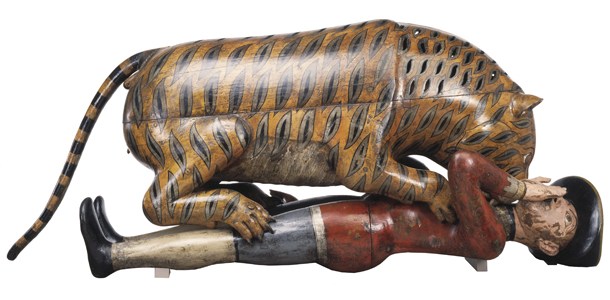
‘Metaphor: a figure of speech by which a thing is spoken of as being that which it only resembles, as when a ferocious person is called a tiger‘ – Chambers Dictionary Saddling metaphor with a definition like that (which is typical, even down to the threadbare example) is akin to giving it a criminal record … Continue reading ‘Is there light in Gorias?’ – reflections on metaphor and truth
The Shadow and the Stone: reflections on the mechanism of metaphor
I mentioned elsewhere that there is a puzzle in our use of metaphor to expand our range of thought: if we think of the unknown in terms of the known concrete, as Vita Sackville-West has it, how does that get us anywhere new? I think I have the answer: it is by a process not … Continue reading The Shadow and the Stone: reflections on the mechanism of metaphor
‘With shabby equipment, always deteriorating…’
We live in an age of infrastructure: we take for granted an underpinning layer of nigh-magical technology, much of it electronic, on which our day-to-day lives rely; occasionally we are visited by anxiety lest it should fail - as the result of a solar storm, perhaps, such as a repeat of the Carrington Event of … Continue reading ‘With shabby equipment, always deteriorating…’
More on Metaphor: St Patrick and the Queen of Tropes
If we are to rescue metaphor from the charge of disrepute, of being essentially dishonest, saying something is what it is not, then we have to look at it differently. For a start, considering metaphor as a figure of speech is not helpful, for then it it is ranked with a host of others, most … Continue reading More on Metaphor: St Patrick and the Queen of Tropes
Metaphor, Queen of Tropes or Dishonest Harridan?
I’m not saying it’s all metaphor, but it is, just about - and vélophile though I am, if you were to press me on what our most important invention is, I would have to put metaphor first, even ahead of the bicycle. It was something we were taught very badly at school: the focus was … Continue reading Metaphor, Queen of Tropes or Dishonest Harridan?
The Cartography of Childhood 2: a recanting
'Blog in haste, repent at leisure.' (old proverb, probably attributed to Albert Einstein/Dr Seuss/Abraham Lincoln) When I said ‘the fantasy element in fantasy literature is the embodiment of the child’s expectations of the grown-up world’ I felt I had pinned down an idea that I have been moving towards for some time - years, in … Continue reading The Cartography of Childhood 2: a recanting
 COMPLEAT TROWZER